13 May 2026
The Era of Local AI Agents: Analysis of Hermes and the NVIDIA Ecosystem
In the artificial intelligence landscape, we are witnessing a fundamental shift: the evolution from simple chatbots to AI Agents. While a traditional LLM answers a question, an agent is capable of planning, executing multi-step tasks, and interacting with the

The Era of Local AI Agents: Analysis of Hermes and the NVIDIA Ecosystem
In the artificial intelligence landscape, we are witnessing a fundamental shift: the evolution from simple chatbots to AI Agents. While a traditional LLM answers a question, an agent is capable of planning, executing multi-step tasks, and interacting with the operating system. In this context, the arrival of Hermes Agent, developed by Nous Research, marks a turning point for those who wish to bring this power within their own local infrastructure.
The bisp&d point of view: what really changes
From our technological observatory, we often see users frustrated by the limits of cloud services: latency, subscription costs and, above all, concerns about data privacy. Hermes changes the perspective because it is not a simple "shell" that queries a model, but a true orchestration layer.
The real innovation lies in two specific capabilities:
- Self-learning: Hermes can write and refine its own "skills". If the agent fails a task or receives feedback, it saves the experience to improve future execution.
- Sub-agent management: Instead of overloading a single process, Hermes creates isolated and temporary workers for specific sub-tasks, optimizing memory use and reducing hallucinations.
The importance of hardware: any PC is not enough
Running AI agents locally requires serious computational resources. The synergy between Hermes and the new Qwen 3.6 models (in the 27B and 35B versions) demonstrates that efficiency is overcoming brute force: smaller models now outperform much more massive previous versions, requiring less VRAM memory.
For those who need an "always-on" system, the introduction of NVIDIA DGX Spark represents the ideal solution. With 128GB of unified memory and a power of 1 petaflop, it is a machine designed to support agentic workflows 24/7 without the bottlenecks of consumer PCs.
Who it is for and what to check before purchasing
This technology is aimed at developers, data management professionals, and automation enthusiasts who do not want to depend on the cloud. However, before investing in hardware for local AI, it is fundamental to verify a few points:
- VRAM Capacity: Models like Qwen 3.6 35B require about 20GB of video memory to run smoothly. Verify that your NVIDIA RTX GPU is adequate.
- Cooling infrastructure: Agents working 24/7 put intense strain on the hardware; an efficient dissipation system is mandatory.
- Software compatibility: Make sure you know how to use runtimes such as Ollama or LM Studio, which facilitate the integration of Hermes.
Local artificial intelligence is no longer just an experiment for a few experts, but is becoming a concrete productivity tool, provided you have the right hardware to support it.
Conclusions
Hermes Agent, supported by the NVIDIA RTX and DGX ecosystem, pushes the boundary of AI toward real autonomy. The possibility of having an assistant that learns from its own mistakes and operates in total privacy on your own hardware is the future of digital work. If you are planning to upgrade your workstation, consider the GPU no longer just as a graphics accelerator, but as the computing engine for your next synthetic collaborator.
Related products
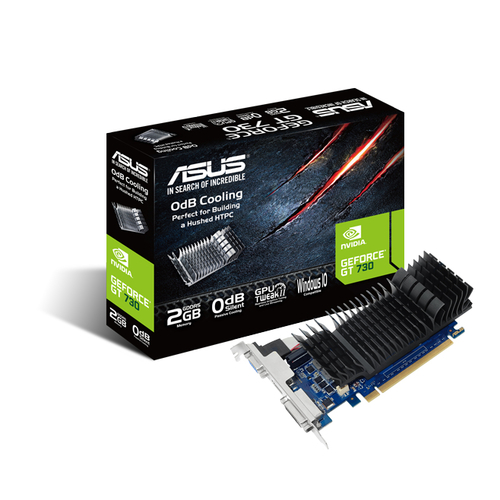
ASUS VGA GEFORCE GT 730, GT730-SL-2GD5-BRK, 2GB GDDR5, VGA/DVI/HDMI, 90YV06N2-M0NA00

ASUS NB 16" TUF i7-14650HX 16GB 1T SSD RTX 5070 8GB WIN 11 HOME
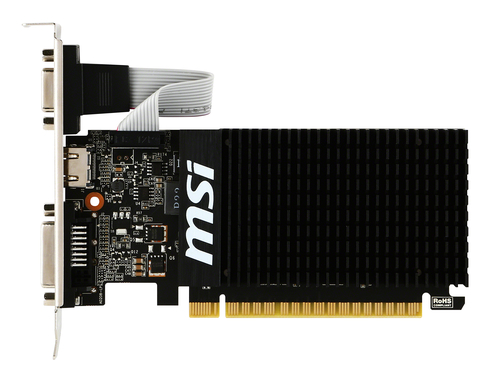
MSI VGA GEFORCE GT 710, GT 710 2GD3H LP, 2GB GDDR3, DVI/HDMI/VGA, LP