11 June 2026
Local AI: DiffusionGemma and the Parallel Generation Revolution
In the artificial intelligence landscape, we are used to seeing text appear on the screen word by word, as if the AI were typing in real time. This process, called autoregressive, is the primary limitation of many current Large Language Models (LLMs). Google D
Local AI: DiffusionGemma and the Parallel Generation Revolution
In the artificial intelligence landscape, we are used to seeing text appear on the screen word by word, as if the AI were typing in real time. This process, called autoregressive, is the primary limitation of many current Large Language Models (LLMs). Google DeepMind, in collaboration with NVIDIA, has introduced DiffusionGemma, an experimental model that radically changes this paradigm.
What really changes: from the "single token" to "text blocks"
The true innovation of DiffusionGemma lies in the generation method. Instead of predicting a single token (a word or part of one) at a time, this model uses a diffusion process, similar to the one used to generate images. In practice, it starts from "noise" and refines it to produce entire blocks of text simultaneously.
DiffusionGemma is capable of processing up to 256 tokens per single pass, eliminating the sequential wait typical of traditional models.
From a technical point of view, this shifts the workload from memory bandwidth (memory-bound) to pure computing power (compute-bound). This is where NVIDIA's optimization comes into play: the Tensor Cores of RTX GPUs are designed specifically to handle this type of massive parallel computation, enabling performance up to 4 times higher than equivalent autoregressive models.
Who it is for and what the practical advantages are
This technology is not intended for the casual user, but it is a breakthrough for developers, researchers, and AI enthusiasts operating locally. The main advantages are:
- Reduced latency: Nearly instantaneous responses, essential for on-device assistants or AI agents that need to plan and act quickly.
- Cloud Independence: Being an open-weights model (Apache 2.0 license), it can run entirely on local hardware, ensuring total privacy and the absence of per-token costs.
- Architectural efficiency: Based on Gemma 4 with a mixture-of-experts architecture of 26 billion parameters, it activates only 3.8 billion per pass, optimizing resources.
What to check before implementing it
To leverage DiffusionGemma, hardware is the determining factor. If you are planning an upgrade to your workstation or PC for local AI, consider these points:
- NVIDIA RTX GPU: The model is optimized for the NVIDIA ecosystem. For maximum consumer performance, integration with cards such as the GeForce RTX 5090 is the benchmark.
- VRAM and Memory: Depending on the version (from RTX PRO workstations to DGX systems), the amount of unified memory is crucial for managing token blocks in parallel.
- Software Stack: Check the support of frameworks such as Hugging Face Transformers, vLLM, or Unsloth for implementation and potential fine-tuning.
The perspective of bisp&d
In the lab, we often see enthusiasm for AI clash with the slowness of local hardware. DiffusionGemma represents a fundamental step forward because it stops "fighting" against memory limits and begins to fully exploit the computing power of modern GPUs. Moving from sequential to parallel generation means transforming AI from a slow chatbot into a true real-time execution engine.
Related products
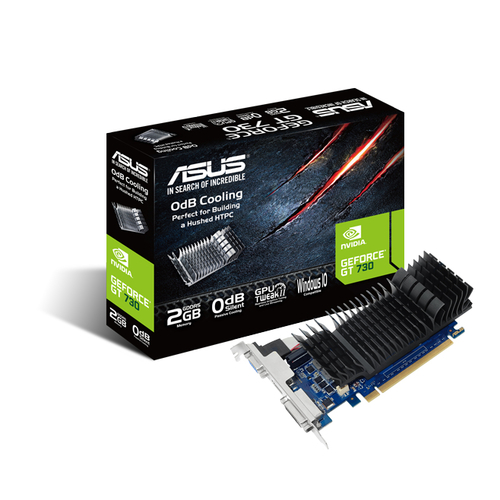
ASUS VGA GEFORCE GT 730, GT730-SL-2GD5-BRK, 2GB GDDR5, VGA/DVI/HDMI, 90YV06N2-M0NA00

ASUS NB 16" TUF i7-14650HX 16GB 1T SSD RTX 5070 8GB WIN 11 HOME
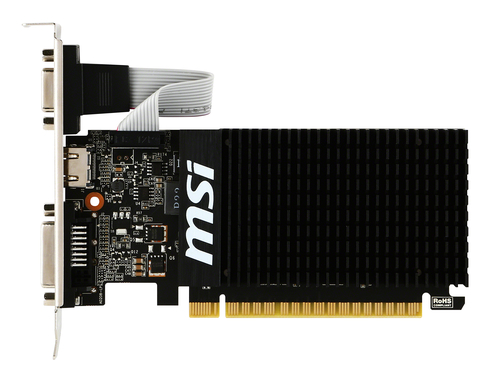
MSI VGA GEFORCE GT 710, GT 710 2GD3H LP, 2GB GDDR3, DVI/HDMI/VGA, LP