15 June 2026
Beyond the Chatbot: The Era of Agentic AI and the Primacy of NVIDIA Blackwell
In the artificial intelligence landscape, we are witnessing a fundamental paradigm shift: the transition from Conversational AI to Agentic AI. While until yesterday the typical interaction was based on a question and an answer (a computational "sprint"), agent
Beyond the Chatbot: The Era of Agentic AI and the Primacy of NVIDIA Blackwell
In the artificial intelligence landscape, we are witnessing a fundamental paradigm shift: the transition from Conversational AI to Agentic AI. While until yesterday the typical interaction was based on a question and an answer (a computational "sprint"), agentic AI works like a "relay race". An agent does not simply respond, but breaks down a complex goal into multiple steps, queries databases, writes code, and corrects its own errors until the task is completed.
What really changes in workload management
This evolution is not only conceptual, but has a massive impact on hardware infrastructure. While a chatbot makes a single call to a large language model (LLM), an agent makes dozens or hundreds in sequence. Complexity does not grow linearly, but multiplicatively, as each step adds context and requires the integration of external tools.
To measure this difference, AgentPerf was created, the first benchmark dedicated to agentic AI. Unlike traditional tests, AgentPerf simulates real workflows, such as software programming in over 12 languages, monitoring how many agents a system can support simultaneously while maintaining high responsiveness standards.
The efficiency of NVIDIA Blackwell: benchmark numbers
The NVIDIA Blackwell Ultra NVL72 platform has demonstrated clear superiority, managing up to 20 times more agents per megawatt compared to the previous architecture, NVIDIA Hopper (HGX H200 system).
From a technical point of view, this performance leap is possible thanks to a total integration of the stack:
- Rack-scale design: The GB300 NVL72 system connects 72 GPUs in a single block, optimizing the distribution of Mixture-of-Experts (MoE) models.
- CUDA Optimization: Kernels accelerate communication between GPUs, reducing coordination latency.
- TensorRT LLM: This technology separates input processing from output generation, allowing independent optimization of both phases.
Who is it for and what to verify before investing
These results are crucial for companies intending to implement AI agents on a large scale, such as automated coding platforms or autonomous business management systems. For those designing the infrastructure, the key data point is no longer just the speed of a single token, but the ratio between useful work produced and energy/economic cost.
Before opting for solutions of this level, it is fundamental to verify:
- The nature of the workload: Do you need simple answers or agents that perform multi-step tasks?
- Energy efficiency: Consumption per megawatt becomes the primary metric when scaling thousands of agents.
- Software compatibility: Verify that the ecosystem of libraries and frameworks used supports TensorRT LLM optimizations.
Conclusions by bisp&d
The arrival of Blackwell and the imminent spread of the Vera Rubin architecture confirm that hardware must evolve to support AI autonomy. We are no longer just looking for "power", but a systemic efficiency capable of managing complex and iterative workflows. For those operating in the technology sector, understanding the difference between simple inference and agentic inference is today the first step to avoid making one's infrastructure obsolete in a few months.
Related products
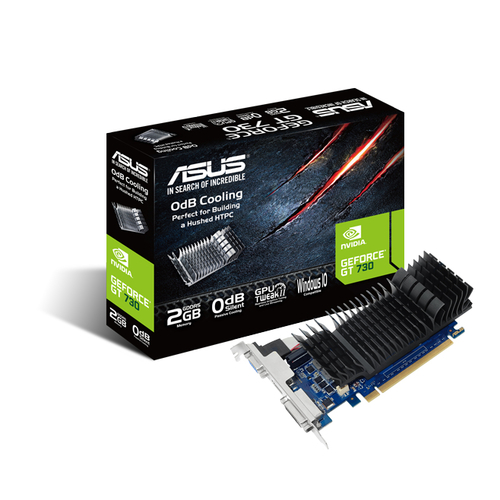
ASUS VGA GEFORCE GT 730, GT730-SL-2GD5-BRK, 2GB GDDR5, VGA/DVI/HDMI, 90YV06N2-M0NA00

ASUS NB 16" TUF i7-14650HX 16GB 1T SSD RTX 5070 8GB WIN 11 HOME
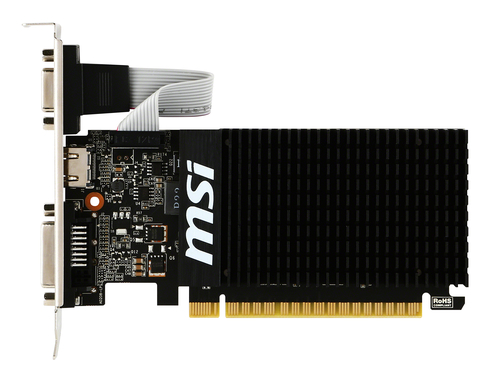
MSI VGA GEFORCE GT 710, GT 710 2GD3H LP, 2GB GDDR3, DVI/HDMI/VGA, LP