09 June 2026
NVIDIA RTX Spark: the era of compact, high-performance AI PCs
The personal computing landscape is undergoing a profound transformation. We are no longer talking only about raw power, but about efficiency and intelligent integration. The announcement of NVIDIA RTX Spark marks a turning point in this direction: it is not a
NVIDIA RTX Spark: the era of compact, high-performance AI PCs
The personal computing landscape is undergoing a profound transformation. We are no longer talking only about raw power, but about efficiency and intelligent integration. The announcement of NVIDIA RTX Spark marks a turning point in this direction: it is not a simple graphics card, but a true "superchip" designed to redefine the user experience of Windows PCs, bringing generative artificial intelligence and high-level gaming to previously unthinkable formats.
What actually changes for the user?
The true revolution of RTX Spark lies in the ability to combine high performance and low power consumption. For years, AAA gaming at 1440p resolution with frame rates exceeding 100 fps was the exclusive domain of bulky desktops or heavy and noisy laptops. With this new architecture, NVIDIA aims to bring this performance to slim laptops with all-day battery life and ultra-compact desktop PCs.
From a technological point of view, the integration of DLSS 4.5 Ray Reconstruction, based on a second-generation transformer model, allows for extremely realistic image quality while optimizing the hardware workload. But the most innovative aspect is the orientation towards personal AI agents: the chip is optimized to handle AI locally, reducing dependence on the cloud and increasing privacy and response speed.
Who is this technology for?
As technology lab experts, we see three user profiles that will benefit the most from RTX Spark:
- Competitive gamers and enthusiasts: those who want to play titles such as League of Legends, VALORANT or PUBG with ray tracing and high fluidity, but do not want to be tied to a desk.
- Content creators: professionals who need computing power for AI and rendering on the go, without sacrificing battery life.
- AI early adopters: users interested in interacting with evolved game characters (such as the PUBG Ally project based on NVIDIA ACE) or using advanced local AI assistants.
What to check before purchasing
When these machines hit the market, we recommend not looking only at the technical specifications, but evaluating some critical aspects:
- Thermal management: in such thin chassis, it is fundamental to verify how the system dissipates heat under maximum load to avoid thermal throttling.
- Software compatibility: ensure that the productivity software or games you use most support the new DLSS 4.5 features and optimizations for RTX Spark.
- Balance between battery life and performance: check if the "all-day battery life" promises refer to office/web use or if they are maintained even during light AI work sessions.
The evolution towards local AI is no longer an option for a few experts, but is becoming a standard feature that transforms the PC from a computing tool into an active collaborator.
Conclusions
RTX Spark is not just a hardware update, but a paradigm shift. By moving artificial intelligence directly onto the device and optimizing energy efficiency, NVIDIA is making high technology more accessible and versatile. For those seeking a balance between professional power and extreme portability, this is the way to go.
Related products
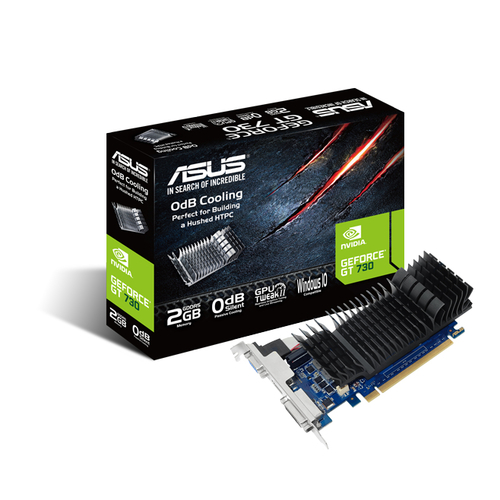
ASUS VGA GEFORCE GT 730, GT730-SL-2GD5-BRK, 2GB GDDR5, VGA/DVI/HDMI, 90YV06N2-M0NA00

ASUS NB 16" TUF i7-14650HX 16GB 1T SSD RTX 5070 8GB WIN 11 HOME
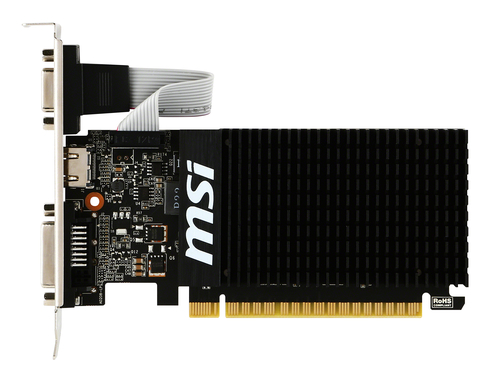
MSI VGA GEFORCE GT 710, GT 710 2GD3H LP, 2GB GDDR3, DVI/HDMI/VGA, LP