05 March 2026
Google Pixel 10a: The balance between artificial intelligence and practicality
In the smartphone landscape, Google's "a" series has always represented the meeting point between economic accessibility and a pure software experience. With the arrival of the new Pixel 10a, Google seems to want to consolidate this position, focusing not only

Google Pixel 10a: The balance between artificial intelligence and practicality
In the smartphone landscape, Google's "a" series has always represented the meeting point between economic accessibility and a pure software experience. With the arrival of the new Pixel 10a, Google seems to want to consolidate this position, focusing not only on performance, but on a structural concreteness that we at bisp&d consider fundamental for the everyday user.
Design and usability: what actually changes
Looking at the details of the new device, the element that immediately catches the eye is the evolution of the design. Google has worked on the shape of the back, making it flat. The camera bar, a distinctive element of the Pixels, is now integrated in such a way as to merge with the body of the smartphone.
From a practical point of view, this change solves two common problems: on one hand, the phone slides more easily into the pocket without getting caught; on the other, it rests perfectly flat on any surface, eliminating the "seesaw" effect typical of models with excessive protrusions. Completing the aesthetic package is the new Berry color, which adds a touch of personality to a device that also claims to be the most resistant of the entire A series.
The technological heart: Tensor G4 and AI
Under the hood, the Pixel 10a is powered by the Google Tensor G4 chip. For those who are not hardware experts, this processor does not only serve to make the phone faster, but is the engine that enables Google's most advanced artificial intelligence tools. The integration between hardware and software allows complex tasks and AI functions to be managed more fluidly, while maintaining energy efficiency.
The Pixel 10a does not seek to compete with top-of-the-line models in terms of the number of lenses, but focuses on the quality of a single-camera system that defines itself as one of the best in its category.
Who is this smartphone for?
The Pixel 10a is aimed at a specific target of users:
- Those looking for quality essentials: those who do not need three or four cameras, but want excellent and reliable shots.
- AI enthusiasts: those who want to test Google's latest software innovations without spending flagship prices.
- Pragmatic users: those who want a robust, compact device that is easy to handle daily.
What to check before purchasing
Before proceeding with the purchase, we recommend evaluating some fundamental technical aspects:
- Storage needs: check if the internal space is sufficient for your apps and files, as A-series models often have fixed memory configurations.
- Ecosystem: ensure that Google's AI features are actually useful for your workflow or leisure time.
- Budget: the indicated list price is 499 dollars, a competitive positioning for the mid-range segment.
Editorial conclusions
The Google Pixel 10a proves to be a smart choice. It doesn't rewrite the rules of the game, but refines them, improving durability and ergonomics. For us at bisp&d, it is a device that demonstrates how software optimization and a design thought for real-world use are often more valuable than technical specifications inflated on paper.
Related products

LENOVO TABLET IDEA TAB TB336ZU 8GB 128GB 5G + LENOVO TAB PEN 11" ANDROID 15 LUNA GREY
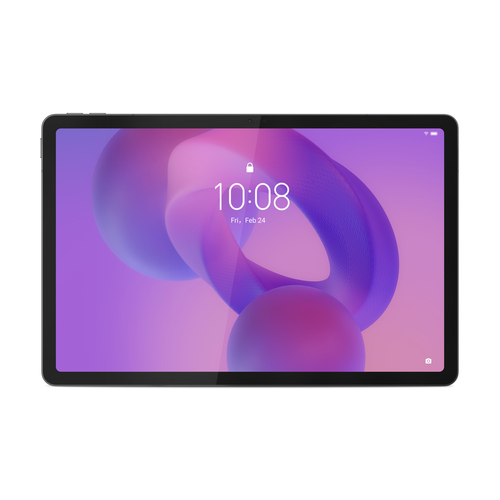
LENOVO TABLET IDEA TAB TB336ZU 8GB 256GB 5G + LENOVO TAB PEN 11" ANDROID 15 LUNA GREY
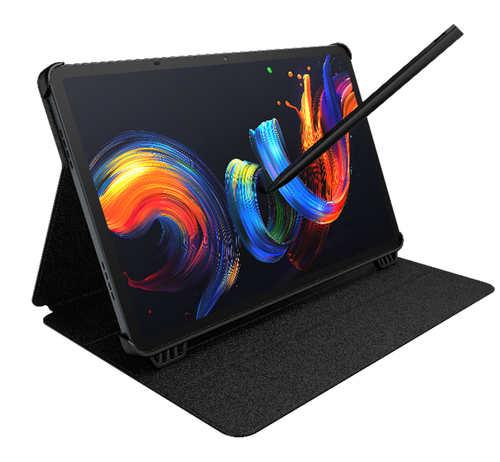
TCL TABLET PC NXTPAPER 11+ MEDIATEK HELIO G99 8GB 256GB 11,5 2.2K ANDROID + CUSTODIA E PENNINO